| Welcome to the Aran Islands |
I lived in Galway between December 2002 and July 2005, which allowed me to visit the three Aran Islands at different periods. The Aran Islands are a group of three islands of different sizes: Inis Mór (Inishmore) is the biggest and the most touristy, Inis Meáin (Inishmaan) is smaller and probably the less visited (too bad!) and eventually, Inis Oírr (Inisheer) is the smallest of the islands. I really recommend staying at least one night on each island so you can compare the ambiance by night and by day. Enjoy the adventure through my photos and comments.
Some examples in images and in text. |
| |
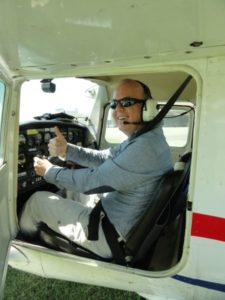
| 1. How to get on the islands? 3 solutions: by swimming (good luck!), by plane (see photo on the left-hand side taken near Inis Meáin's "airport") or by boat. The latter is, to my opinion, the best because it is sometimes possible to see dolphins and seals during the crossing. |
2. Go to Inis Meáin...
[   ]
The best way to meet the local people is to sleep in B&Bs/guest houses. During my short visit to Inis Meáin, I stayed at Máire Pháidín's (see photo), a charming elderly lady, who left her wild island to live in New York in the 1950s... Who would have believed that? |
3. Follow the Irish Yeti's trackway...
[  ] We are still on Inis Meáin. Here is a strange example of what nature can do to a rock. This photo always reminds me of the cover of the famous comic strip "Tintin in Tibet" (see above). Funny, isn't it?
 |
4. Observe the ground of Inis Meáin...
[  ]Originally, the three Aran Islands were only covered with rocks. When the first inhabitants arrived on the islands, they dried out seaweed from the Galway bay, which they then used as a substratum for the first crops. The photo on the right-hand side was taken in Inis Meáin and gives an idea of what initially covered the islands. |
5. Admire the landscape of Inis Meáin...
[  ] The three islands have quite similar landscapes: some small houses and some fields separated by small stonewalls. The latter are used to protect the fragile soil fertility against the wind and the rain, which sweep across Galway Bay on a regular basis. |

Photo 5. A landscape from Inis Meáin. |
6. Go in a fort in Inis Meáin...
[  ] Like its elder sister, Inis Meáin has at least two forts which are still in good shape. As an example, on the right-hand side, you can see a photo of Dún Chonchúir. |
7. Observe the wind turbines of Inis Meáin...
[ ] The island has got at least 3 turbines, which bring electricity to a small seawater desalination plant. |
8. Watch Inis Meáin's walls...
[   ] The playwright John Millington Synge stayed on the island every summer from 1898 to 1902, which gave him the inspiration for "The Playboy of the Western World". The writer's favourite place on the island, now called "Synge's Chair", overlooks Inis Mór and the Atlantic. On the right-hand side is a photo taken in the area. |
9. Observe Inis Oírr and the Cliffs of Moher from Inis Meáin...
[   ] From Inis Meáin, it is possible to see not only a chunk of the smallest of the Aran islands, Inis Oírr, but also the Cliffs of Moher (see Co. Clare). See photo. |
10. Disembark in Kilronan on Inis Mór...
[   ]
Let's go to another island. We are now in the small village of Kilronan on Inis Mór. It is the biggest and also the most touristy of the Aran Islands. The port is characterised by its Celtic cross, as you can see in the photo. |
11. Be blown away on Inis Mór!
[   ] As mentioned before, the islanders took the time to build stonewalls to protect the soil against the wind and the rain. Trees are very rare there, and for those that still manage to grow, their shape will be strongly influenced by the elements. |
12. Observe the cliffs of Inis Mór...
[   ] One of the best sites on Inis Mór is called Dún Aonghasa (Dun Aengus), from where you can have a fantastic view of the cliffs and the sea. Take a look for yourself. |

Photo 12. Cliffs of Inis Mór. |
13. Observe the "chevaux de frise" of Inis Mór...
[    ] The fort is protected by the "chevaux-de-frise", which are tall blocks of limestone set vertically into the ground. This defensive idea looks simple, but it is definitely efficient to deter attackers. |
14. Visit Dún Eoghanachta and Dún Aonghasa...
[    ] Located on a cliff overlooking the Atlantic ocean, Dún Aonghasa is the largest of the prehistoric stone forts of the Aran Islands. It is enclosed by three massive dry-stone walls and by the "chevaux-de-frise". Close to this fort, you can see another fort: Dun Eoghanachta, where the photo #14 was taken. |

Photo 14. Dún Eoghanachta on Inis Mór. |
| |
15. Visit Dún Eochla...
[  ] We are still on Inis Mór. You can now visit Dún Eochla, which is another ring-fort. It is located inland and can be seen from the main road. |
16. Enter Clochán na Carraige...
[  ] As in County Kerry, Inis Mór has a stone beehive hut, also called a clochán. The shepherds used it in the past to store food. The structure is unusual because while the the outside is circular, the inside is actually rectangular.
|
17. Pass by Na Seacht dTeampall...
[  ] The site called "Na Seacht dTeampall (The Seven Churches)" belongs to the Christian heritage of the island. Amongst the remains, you can see some late 11th century high-crosses. |

Photo 17. Na Seacht dTeampall on Inis Mór. |
18. Look at the houses of Inis Mór...
[  ] On the right-hand side, you can see an Irish cottage in good shape, still inhabited, with its thatched roof. Contrary to what one may think, it is still possible to build your house on the Aran Islands. However, this will cost you twice the price that you would pay for a similar house in the rest of the county. |
19. Visit Teampall Bheanain in Inis Mór...
[  ] Teampall Bheanáin ("teampall" means church) is considered the smallest church in the world and is notable for its orientation: facing north-south instead of east-west. |
20. Go on the beach of Mhuirbhigh...
[   ] Inis Mór has several beaches where you can have a swim (or to be more accurate, refresh yourself). On the right-hand side, observe the sunset on one of the island’s beaches (Cill Mhuirbhigh), which allows me to close the chapter "Inis Mór". |

Photo 20. Beach of Mhuirbhigh on Inis Mór. |
21. See the ghost boat of Inis Oírr...
[   ] We now arrive on the small island of Inis Oírr, which also has its rocky landscape. There, you'll be able to see a little local curiosity: the wreck of a cargo ship (The Plassey). It feels almost as if we were in a pirate movie or in an episode of the TV series "Lost"... |

Photo 21. The Plassey on Inis Oírr. |
22. Photograph the animals on the Islands...
[  ] There aren't so many inhabitants on the Aran Islands (250 on Inis Oírr, less than 200 on Inis Meáin, around 1000 on Inis Mór). There aren't a lot of animals either. You'll be able to see sheep, donkeys, goats, cows and probably poultry. On some days you may see seals on the islands. On the right-hand side, I show you a photo of a horse on the island. He must really feel lonely.
|
23. Visit O'Brien Castle...
[  ] While the other two islands have got highly visible forts, on Inis Oírr lies the medieval O'Brien’s Castle, built in an ancient stone fort on top of the only hill on the island. See the photo on the right-hand side. |
24. Admire the landscape of Inis Oírr...
[  ] The three islands have similar landscapes: small houses and fields separated by small stone walls. Here is the landscape you can see from O'Brien’s Castle, on Inis Oírr. |